
Does Radon Mitigation Work?
Yes—radon mitigation works when it’s installed correctly and verified with a follow-up test. The best way to think about radon mitigation is not “a home improvement.” It’s an engineering control: pressure management at the foundation so radon is vented outside instead of entering living space.
What most homeowners really want to know is:
- Will it reliably lower my number?
- Will it stay low over time?
- How do I prove it worked—not just hope?
This page answers those questions without hype, using the same logic public health agencies use: test → interpret → mitigate → verify → monitor.
Learn more:
radon testing
Learn more:
Quick Definition: What Counts as “Working”?
A radon mitigation system “works” when it achieves all three:
- Measurable reduction (radon level drops after installation)
- Verified performance (a post-mitigation test confirms the drop)
- Stable operation over time (retesting every couple of years, and after remodeling)
If you can’t point to a post-install test result, you don’t have proof—you have a guess.
EPA Decision Anchor (One Reference You Need)
Use this as your decision line:
- Fix at 4 pCi/L or higher
- Consider fixing between 2–4 pCi/L (especially if you want extra margin or have higher concern)
These are not “panic thresholds.” They’re action thresholds used to guide practical decisions.
Do Radon Mitigation Systems Work? What the Best Evidence Says
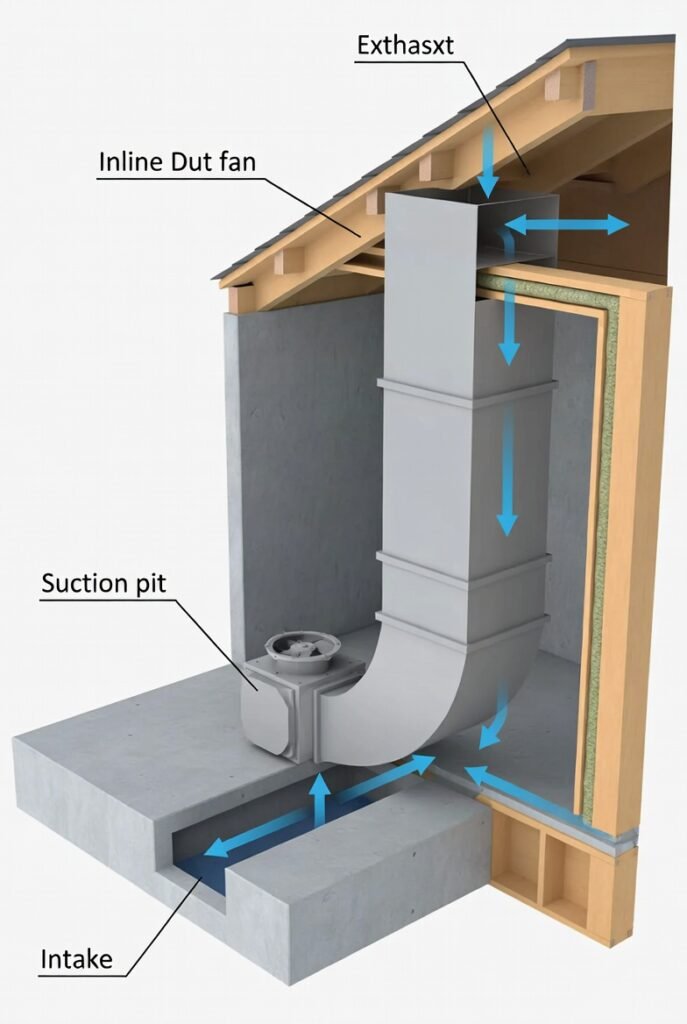
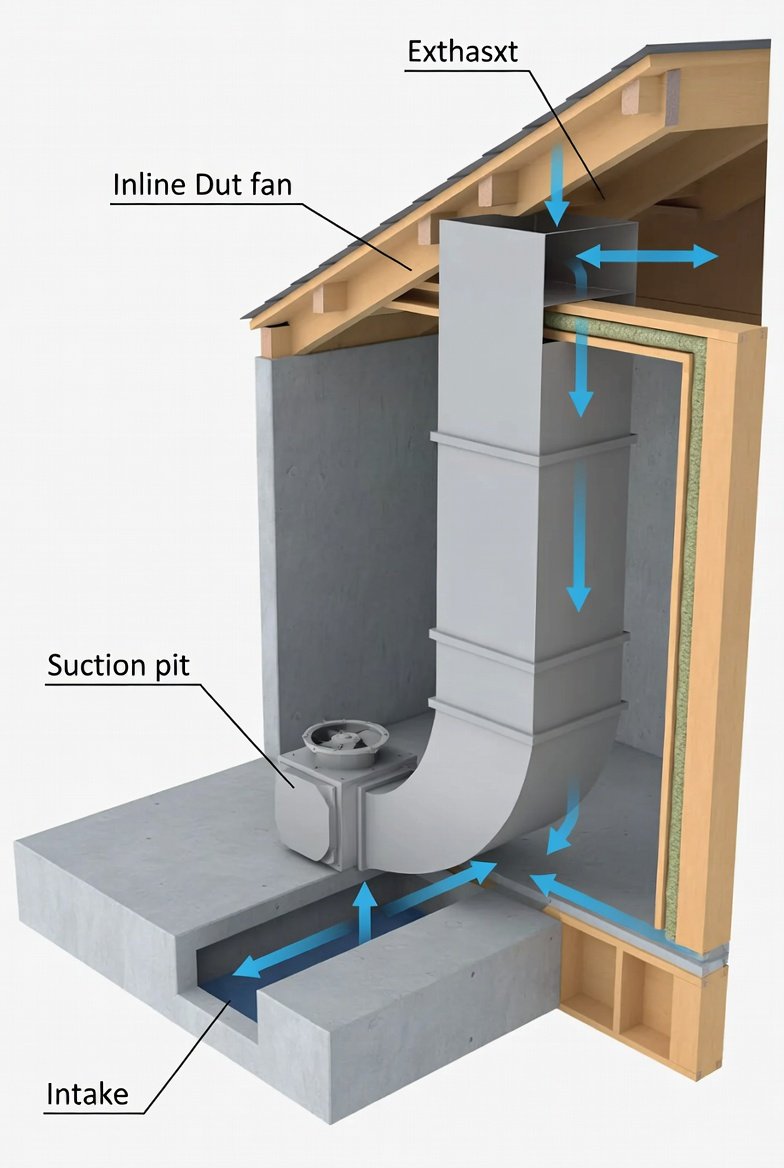
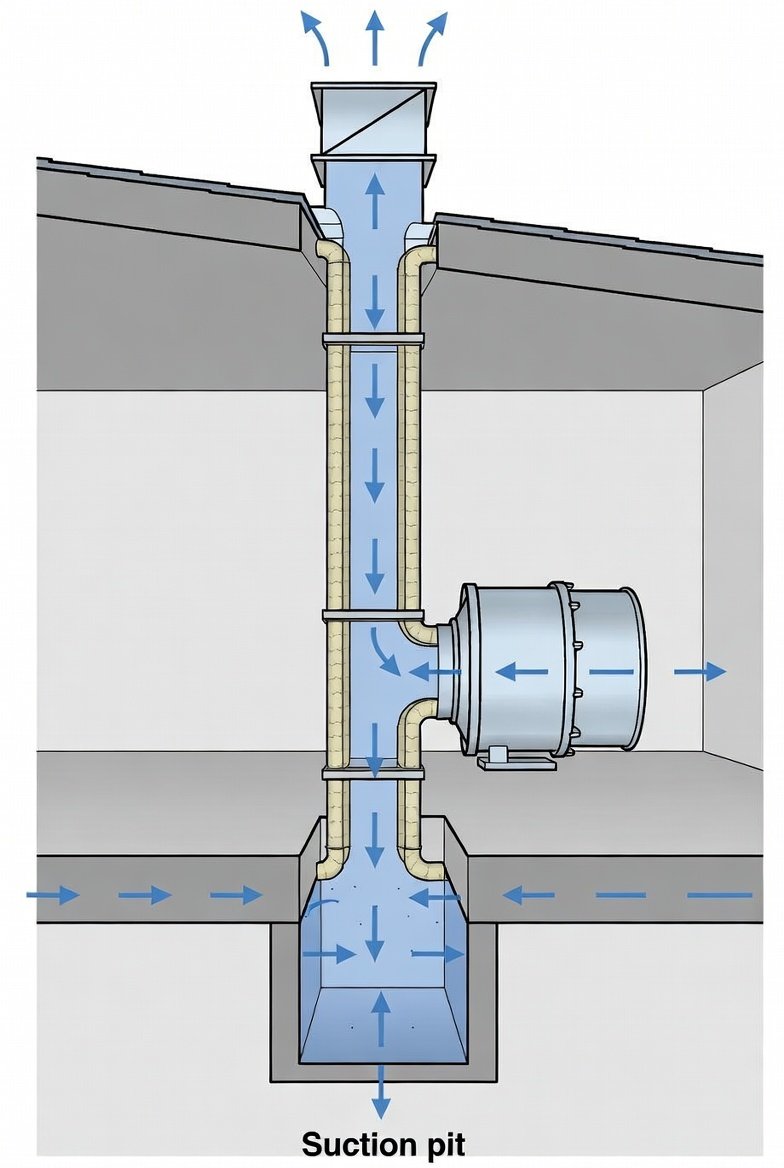
The most common mitigation approach in existing homes is active soil depressurization / sub-slab depressurization (SSD/ASD)—a fan creates negative pressure under the slab so soil gas is pulled into a pipe and vented above the roofline instead of leaking indoors.
When SSD is designed and installed properly, published EPA technical guidance notes it can reduce indoor radon levels very substantially (often cited in the 80% to 99%+ range depending on conditions).
Important nuance (this is where bad contractor pages oversimplify):
“Can reduce” isn’t the same as “will reduce in every house by the same amount.” Effectiveness depends on how well the system matches the building.
How Radon Mitigation Works (No Myths, Just Mechanics)
Radon mitigation doesn’t “block radon.” It changes the pressure relationship between your home and the soil.
Core mechanism (SSD/ASD):
- A suction point is created under the slab (or in drain tile / sump area)
- A continuously running fan pulls soil gas into the pipe
- The gas is vented above the roofline
Why sealing is mentioned (but not sufficient alone):
Sealing cracks and openings can improve system efficiency and cost-effectiveness, but sealing alone is usually not a reliable primary fix.
Learn more:
Effectiveness Comparison: What Works Best in Different Homes
Comparison Table: System Type vs Effectiveness Logic
Home Type / Condition | Most Common Effective Approach | Why It Works | What Usually Fails |
Basement with slab | Active sub-slab depressurization | Controls pressure at the soil-slab boundary | Poor slab communication, weak suction field |
Slab-on-grade | Sub-slab suction + sealing | Same principle; suction point placement matters | Undersized fan, bad suction point location |
Crawlspace | Crawlspace mitigation (often sealing/encapsulation + venting) | Stops soil gas entry and manages pressure | Leaving soil exposed; incomplete sealing |
Multi-story home | Source control at foundation | Lower entry = lower levels throughout house | Skipping verification; assuming upstairs “safe” |
Two practical truths:
- Foundation entry is the source.
- Source control generally lowers levels across the whole house—including upstairs—because you’re reducing what enters in the first place.
Learn more:
basement-radon-mitigation-system-cost
The Objection-Killer: “How Do I Know It Worked?”
You test. And you follow the timing rules.
EPA guidance for follow-up testing is clear and operational:
- A post-mitigation radon test should be done within 30 days of installation
- No sooner than 24 hours after the system is operating (fan on, if present)
- It’s recommended you get an independent follow-up measurement, not only the contractor’s check
CDC guidance also emphasizes: after installing a radon reduction system, test again to make sure it is working, and consider retesting every two years, and after remodeling.
Verification Checklist (Copy/Paste for Homeowners)
Within 30 days after installation:
- Confirm the fan is running
- Do a short follow-up radon test (contractor may do one; you should also do an independent one)
- Document the result (keep it with home records)
Ongoing:
- Retest about every 2 years
- Retest after renovations or HVAC changes
That’s proof. Everything else is marketing.
Why Some Systems “Don’t Work” (And How to Spot It Fast)
Most “failures” are not because mitigation is fake. They’re because the system is mismatched or underpowered for the building.
Common reasons performance is weak
- Poor suction field / slab communication (system can’t pull air from under the whole slab)
- Suction point placed in the wrong location
- Fan sizing mismatch (not enough pressure for the building)
- Complex foundations (multiple slabs, additions, varying fill)
- Crawlspace left partially exposed
- Major air/pressure changes after install (weatherization, new HVAC, remodeled basement)
How you catch problems
- The post-mitigation test is still elevated
- Or levels are lower but creep upward over time → a reason to inspect system operation and retest
This is why verification isn’t a formality. It’s the core of the control loop.
Will Levels “Come Back” After Mitigation?
They can—if something changes.
Radon levels are influenced by:
- House pressure dynamics
- HVAC behavior
- Sealing/air leakage
- Remodeling and weatherization
That doesn’t mean mitigation “stops working.” It means:
- Fans can fail
- Homes evolve
- You need periodic measurement
Mitigation is like a sump pump: it’s reliable when it runs, but you still check it.
Does Radon Mitigation Work Upstairs Too?
Usually, yes—because you’re reducing the source entry at the foundation.
But the real answer is: it should be confirmed by testing.
If you want the home-behavior explanation (stack effect, HVAC mixing, stairwell airflow), start here:
Learn more:
Cost vs Effectiveness (The Clean Framing)
You’re not buying “peace of mind.” You’re buying a measurable reduction in an ongoing exposure.
If your level is elevated:
- The alternative to mitigation is continued exposure
- The only reliable way to lower exposure is source control + verification
A good system is not “cheap or expensive.” It’s verifiable or not verifiable.
Choosing a Contractor Without Guessing
The EPA consumer guide points homeowners toward recognized proficiency programs like NRPP and NRSB and emphasizes follow-up testing and documentation.
What you want from a pro:
- A clear explanation of the system
- A plan for follow-up testing
- Written documentation of the post-mitigation result
Bottom Line
Yes—radon mitigation works. The gold-standard approach (active soil/sub-slab depressurization) is widely used because it reliably reduces indoor radon when installed correctly.
But the only “objection-killer” that matters is proof:
Install → test within 30 days → document the result → retest periodically.
If you do that, you’re not guessing. You’re managing exposure with measurement.
Learn more:
what-is-considered-long-term-exposure-to-radon
FAQs
Do radon mitigation systems work?
Yes. Properly designed systems—especially active soil/sub-slab depressurization—are widely used because they can reduce indoor radon levels substantially.
How effective is a radon mitigation system?
Effectiveness depends on the home and system design, but EPA technical guidance notes sub-slab depressurization can achieve very large reductions when installed correctly.
How do I verify my radon mitigation system is working?
Do a post-mitigation radon test within 30 days of installation (and no sooner than 24 hours after the system is operating). CDC also recommends testing again after installation and considering retesting every two years and after remodeling.
Does sealing cracks fix radon by itself?
Sealing can help make a system more effective and cost-efficient, but sealing alone is usually not a reliable primary fix.
Do mitigation systems reduce radon upstairs?
They typically reduce radon throughout the home because they reduce entry at the foundation, but the right way to confirm is testing.