
What Is Considered Long-Term Exposure to Radon?
Radon is measured, not felt.
There are no early warning symptoms. No burning smell. No immediate illness.
When people ask, “What counts as long-term exposure to radon?” they’re usually trying to answer a deeper question:
“Have I already been harmed?”
The correct way to frame this is clinical and simple:
Long-term radon exposure means breathing an elevated average radon level over years — not days or weeks.
Risk is driven by:
Average radon level × time exposed.
Not one weekend.
Not one short spike.
Not one open-window reading.
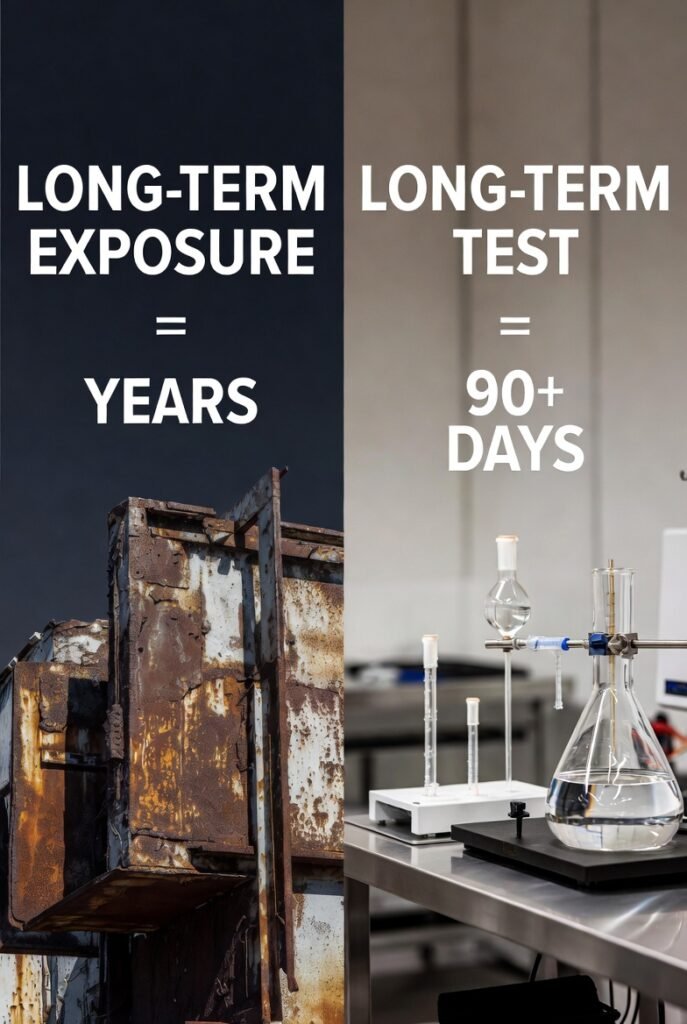
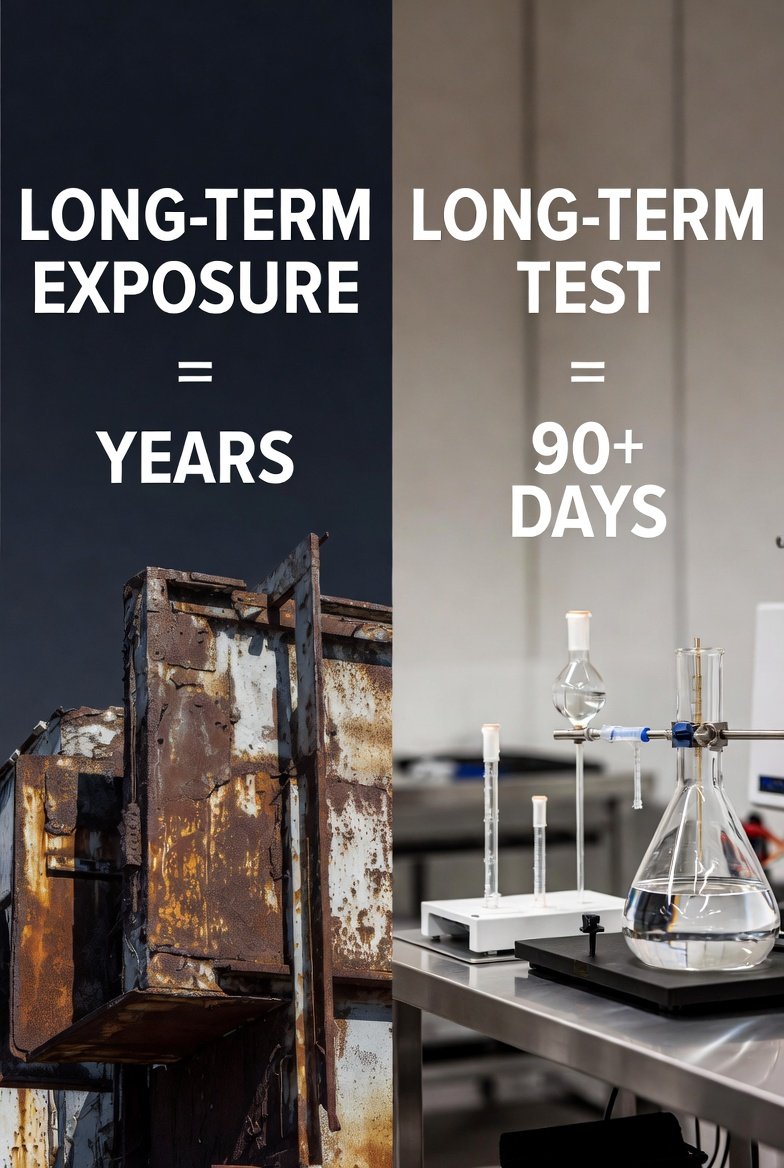
Definition Box: Two Different Meanings of “Long-Term”
There are two terms that get confused online.
Long-Term Exposure (Health Concept)
Years of living or working in a building with an elevated average radon level.
Long-Term Test (Measurement Concept)
A radon test lasting 90 days or more, designed to estimate your annual average.
These are related — but not the same.
A 90-day test helps estimate your yearly average.
Health risk is about years of breathing that average.
Learn more:
radon testing
How Radon Risk Actually Works
Radon does not behave like carbon monoxide.
Radon
- No immediate symptoms
- No acute poisoning stage
- Risk develops over years
- Main outcome: lung cancer
Carbon Monoxide
- Acute poisoning risk
- Immediate symptoms
- Emergency scenario
Radon risk is cumulative. It builds quietly over time.
If someone feels suddenly ill, radon is not the first suspect.
The One EPA Threshold You Need To Understand
The EPA action framework is practical and clear:
- Fix at 4 pCi/L or higher
- Consider fixing between 2–4 pCi/L
- There is no known safe level
The number is not a panic line.
It is a decision anchor.
Learn more:
radon level safe
What Counts As “Long-Term” In Real Life?
Here’s how to think about it operationally.
1. You Lived There 6 Months
That is exposure — but not typically considered “long-term” in a medical sense.
Still: measure.
2. You Lived There 5+ Years
If the radon level was elevated during that time, that qualifies as long-term exposure.
3. You Slept In The Basement For Years
Sleeping 8 hours daily in a lower level with elevated radon increases exposure duration significantly.
4. Occasional Basement Use
Lower exposure compared to full-time occupancy.
Radon risk scales with occupancy time.
Occupancy Risk Framing (Clear, Not Dramatic)
Risk increases when:
- The average level is elevated
- Exposure lasts years
- The person smokes or previously smoked
Smoking dramatically increases radon-related lung cancer risk.
If anyone in the home smokes or used to smoke, treat borderline results as “act sooner” — not “wait.”
No panic. Just triage.
Decision Path Table — What To Do Based On Your Situation
Situation | Meaning | Next Step |
No test yet | Exposure unknown | Test lowest lived-in level |
Short test below 2 pCi/L | Likely lower risk | Optional long-term test for annual average |
Short test 2–4 pCi/L | Moderate range | Consider long-term test or mitigation |
Short test ≥ 4 pCi/L | Action threshold | Confirm or mitigate |
Buying/selling home | Deadline pressure | Negotiate mitigation + post-install verification |
Learn more:
Testing Procedure — The Correct Way
Where To Place The Test
- Lowest lived-in level
- Not in unfinished crawlspaces unless regularly occupied
Short Test (2–90 days)
- Used for screening
- Must follow closed-house conditions
- Useful in real estate timelines
Long Test (90+ days)
- Estimates annual average
- More stable result
- Best for long-term risk clarity
Radon levels fluctuate by season, ventilation changes, HVAC use, and pressure differences.
That is why annual average matters.

Buyer / Inspection Stage Script
If you are under contract and results are elevated:
Request:
- Active mitigation system installation
- Post-mitigation radon test
- Written results showing levels below the action threshold
Verification is part of the solution.
Mitigation without testing is incomplete.
Learn more:
Does Long-Term Exposure Mean Immediate Harm?
No.
Radon risk develops over years.
Even if you lived in a home with elevated radon for years, the correct response is still:
Test.
Reduce exposure.
Verify performance.
Monitor going forward.
You cannot change past exposure.
You can control future exposure.
What Actually Reduces Long-Term Exposure Risk
Mitigation systems work by controlling pressure beneath the slab or foundation.
They do not “block gas.”
They redirect and vent it.
A properly installed system should significantly reduce indoor radon levels.
Verification testing confirms performance.
Learn more:
basement-radon-mitigation-system-cost
If You’re Unsure — Use This Simple Framework
- Have you tested?
- Do you know your annual average?
- Is it near or above the EPA action level?
- Is anyone in the home a smoker?
- Have you verified mitigation performance?
If the answer to #1 is no — start there.
Everything else follows.
Final Risk Clarifier
Long-term radon exposure is not defined by a weekend.
It is defined by years of breathing an elevated average level.
The correct mindset is not fear.
It is measurement and control.
Radon safety is measurable.
Mitigation is verifiable.
Monitoring keeps it stable.
That is how exposure risk is managed.