
Basement Radon Mitigation System Cost: What You’ll Actually Pay (And Why Cheap Quotes Fail)
Basement radon mitigation isn’t expensive because of the fan.
It’s expensive when it’s done wrong — and has to be corrected during an inspection deadline.
Most basement radon mitigation systems cost $800–$2,500, with standard unfinished installs clustering near the lower end. But finished basements, dense soil, complex routing, or multi-point systems can push pricing higher.
The real cost question isn’t “How much is the fan?”
It’s:
Will this system reduce radon enough to pass inspection — and stay reduced?
Who This Page Is For
This guide is for homeowners who want verified radon reduction — not just a fan installed to pass a visual inspection.
Why Basement Pricing Varies So Much
Basement radon mitigation pricing is less about the fan and more about how hard it is to move air under your slab.
That’s why two homes on the same street can see a $1,500+ difference in pricing.
Radon mitigation is pressure engineering — not hardware installation.
Basement Radon Mitigation Cost Ranges
Basement Scenario | Typical Cost Range (Installed) |
Unfinished basement (1 suction point) | $800 – $1,800 |
Finished basement (concealed routing) | $1,200 – $2,800 |
Large basement / dense soil / multi-point | $1,800 – $3,500 |
Basement + crawlspace combination | $2,000 – $4,000 |
Typical Basement Mitigation Packages (Good / Better / Best)
🟢 Good — $800–$1,200
- One suction point
- Unfinished basement
- Straightforward exterior routing
- Basic post-install testing
🟡 Better — $1,200–$2,200
- Finished basement routing
- Cleaner pipe concealment
- Verified post-install test included
- Thoughtful fan sizing
🔵 Best — $2,200–$3,500+
- Large or segmented slab
- Multiple suction points
- High static-pressure fan
- Resale-grade documentation
- Designed for long-term performance
This structure helps you evaluate quotes based on engineering depth, not just price.
The 7 Basement Variables That Change Cost
1️⃣ Finished vs Unfinished Basement
Finished basements increase labor due to:
- Concealed routing
- Fire-block sealing
- Surface protection
- Longer vertical runs
Unfinished basements allow direct installation — which lowers cost.
2️⃣ One Suction Point vs Two
Large slabs or dense soil often require two suction points.
Each additional suction point typically adds $400–$900, depending on routing and access.
3️⃣ Soil Resistance Under the Slab
Clay-heavy or compacted soil requires stronger static pressure fans.
Higher resistance = stronger fan = potentially higher install cost.
4️⃣ Pipe Routing Complexity
Pricing increases when:
- No clear attic or garage path
- Finished ceilings block vertical runs
- Roof exit is complicated
- HOA restrictions require creative routing
For routing logic, learn more:
5️⃣ Fan Selection (Performance, Not Marketing)
Fan cost varies by performance class.
Correct sizing depends on:
- Slab footprint
- Soil permeability
- Pipe resistance
Active system fundamentals explained here:
active-radon-mitigation-system
6️⃣ Inspection & Resale Pressure
Radon mitigation often becomes urgent during:
- Buyer inspection
- FHA or relocation transactions
- Finished basement occupancy
A documented system with verified post-install reduction protects you from renegotiation leverage.
Action level guidance:
The United States Environmental Protection Agency recommends mitigation at 4.0 pCi/L and considering action between 2.0–4.0 pCi/L, especially when basements are occupied.
7️⃣ Post-Install Verification (Often Ignored in Cheap Quotes)
A running fan is not proof of success.
You want:
- Post-install radon test
- Clear performance target
- Written documentation
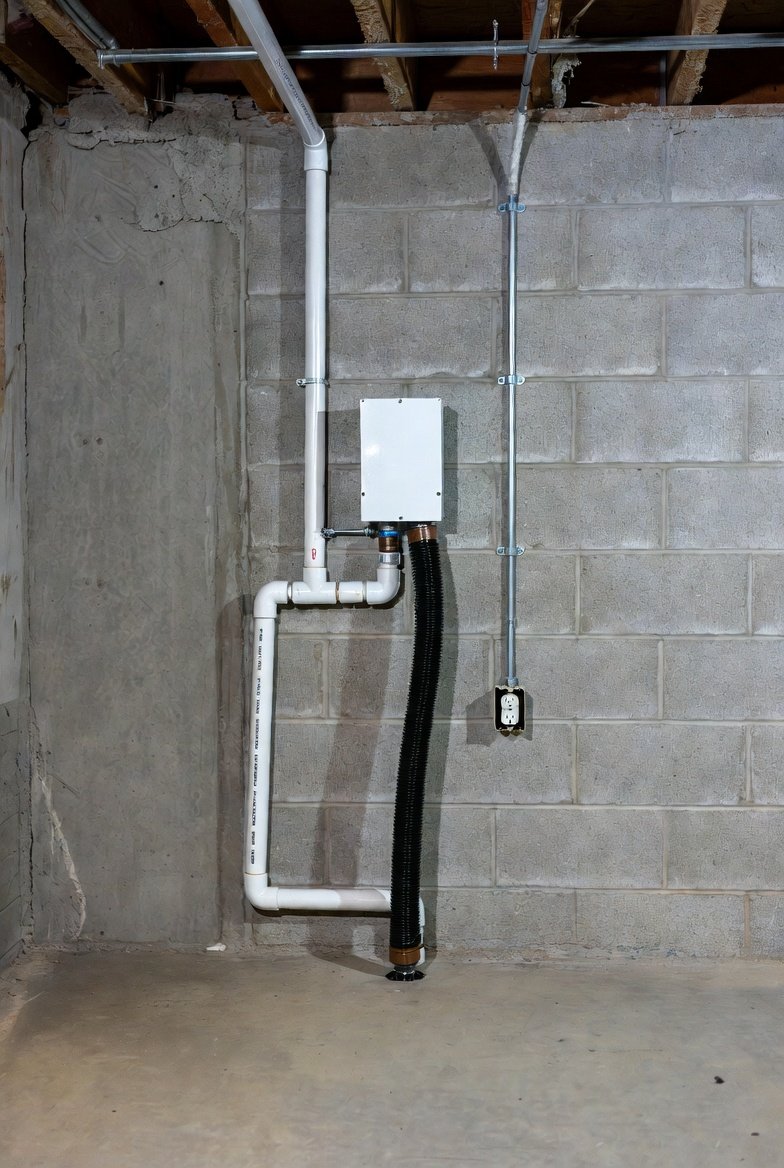
Effectiveness overview:
What Cheap Quotes Usually Skip (Installer Reality Check)
Lower bids often exclude critical elements such as:
- No post-install test included
- Undersized fan selected to reduce material cost
- No contingency if first design fails
- Cosmetic repair responsibility unclear
- Sump lid sealing excluded
- No documentation for resale
A low price without performance accountability is not a bargain.
It’s deferred cost.
Rework Costs (Why Doing It Right Once Matters)
If a system fails to reduce radon adequately, upgrades may include:
- Add second suction point (+$400–$900)
- Upgrade fan (+$300–$700 installed)
- Modify routing to reduce resistance
- Improve slab sealing
Rework costs are rarely discounted, because the installer is now correcting assumptions — including their own.
Long-Term Ownership Cost
Radon mitigation is a continuous pressure-control system.
Annual considerations:
- Electricity: typically tens to low hundreds per year depending on rates
- Fan lifespan: 7–10 years
- Future fan replacement: $300–$900 installed
- Periodic retesting recommended
Over 10 years, total ownership may exceed initial install cost — and that’s normal.
How to Get Accurate Basement Quotes
Before calling installers, prepare:
- Radon test result (basement level reading)
- Basement layout (finished/unifinished)
- Approximate slab size
- Sump presence
- Routing preferences
Ask two critical questions:
- Is post-install testing included?
- What happens if levels remain above 4.0 pCi/L?
These questions filter serious professionals.
Is Basement Radon Mitigation Worth the Cost?
If radon levels exceed action thresholds, mitigation is a measurable risk reduction step.
It improves inspection outcomes.
It reduces negotiation risk.
It provides documented correction.
Basements are the primary radon entry zone — addressing that space directly matters.
Final Verdict
Most homeowners spend between $1,000 and $2,500 for basement radon mitigation.
Finished basements and multi-point systems increase cost.
The right decision isn’t choosing the lowest bid — it’s choosing verified performance.
When properly designed and tested, basement radon mitigation remains one of the most measurable indoor air safety improvements available.
FAQs
How much does basement radon mitigation system cost?
Most installs range from $800–$2,500 depending on layout and soil conditions.
Why do radon mitigation quotes vary so much?
Because slab size, soil resistance, finished routing, and suction point requirements differ significantly between homes.
Is mitigation more expensive in finished basements?
Yes. Concealed routing and restoration increase labor cost.
What is the EPA action level for radon?
Mitigation is recommended at 4.0 pCi/L or higher, with consideration between 2.0–4.0 pCi/L.
How long does installation take?
Most systems are installed in one day unless routing complexity increases labor time.
What if the first system doesn’t work?
Upgrades may include additional suction points or stronger fan models.
Does radon mitigation require retesting?
Yes. Post-install testing verifies performance.