
What Are the First Signs of Radon Poisoning?
Radon is measured, not felt.
At typical residential exposure levels, radon does not cause immediate symptoms and has no reliable “early warning signs.” The harm is long-term: radon exposure increases lung cancer risk over years, not hours.
That’s why “radon poisoning symptoms” is such a trap query. People search it expecting headaches, nausea, or dizziness. But those symptoms usually point to other indoor air hazards that can make you sick quickly.
Quick answer: The first actionable “sign” of radon is a test result — not a physical symptom.
Who This Page Is For / Not For
This guide is for: homeowners who want medically accurate guidance and a clear action plan.
This guide is not for: diagnosing symptoms at home. If you feel sick, treat it as a safety issue first.
Quick Safety Interpretation
Concern | What’s true | What to do |
“First signs of radon poisoning” | Radon typically has no immediate symptoms | Test your home to know your level |
“Radon symptoms headaches” | Headaches are not a typical radon symptom | Treat as possible CO / gas / chemical issue first |
Long-term radon exposure | Risk increases over years | Test, interpret, mitigate if needed |
Learn how to test correctly:
Learn more:
Why Radon Doesn’t Cause Immediate Symptoms
Radon is a radioactive gas that can enter through soil under your home and accumulate indoors — especially in basements. When inhaled over time, its decay particles can damage lung tissue. The health risk is primarily long-term, which is why people don’t “feel” radon exposure in the moment.
Radon is different from irritants (smoke) and acute poisons (carbon monoxide). It typically does not cause:
- burning eyes
- throat irritation
- sudden headaches
- immediate nausea
- instant breathing distress
If you’re relying on symptoms to detect radon, you’re likely to miss it — which is exactly why testing is the standard.
Radon Symptoms Headaches: The Clear Truth
If you’re searching “radon symptoms headaches,” here’s the clinically useful framing:
Headaches are not considered a typical symptom of radon exposure at common residential levels. Radon risk is mainly tied to lung cancer development over time.
When people report headaches and assume radon, it’s often because the home has another indoor air problem happening at the same time (or they’re confusing radon with carbon monoxide exposure).
If You Have Headache + Nausea + Dizziness (Do This First)
If you or others in the home suddenly experience:
- headache
- nausea/vomiting
- dizziness
- confusion
- unusual drowsiness
treat it like a possible carbon monoxide (CO) / gas / chemical exposure until proven otherwise.
Immediate steps:
- Get everyone into fresh air
- If symptoms are significant or worsening, contact emergency services
- Do not “sleep it off” in the home
- Check CO alarms if you have them; install them if you don’t
Radon is a long-term risk. CO can be an immediate emergency.
So What Symptoms Can Radon Cause?
Radon exposure itself usually doesn’t produce early symptoms. The symptoms commonly discussed in radon contexts are symptoms of lung cancer, which may appear years after long-term exposure.
Possible lung cancer symptoms can include:
- persistent or worsening cough
- coughing up blood
- chest pain
- shortness of breath
- hoarseness
- unexplained weight loss
- fatigue
These symptoms are not radon-specific and can occur for many reasons. If you have them, seek medical evaluation.
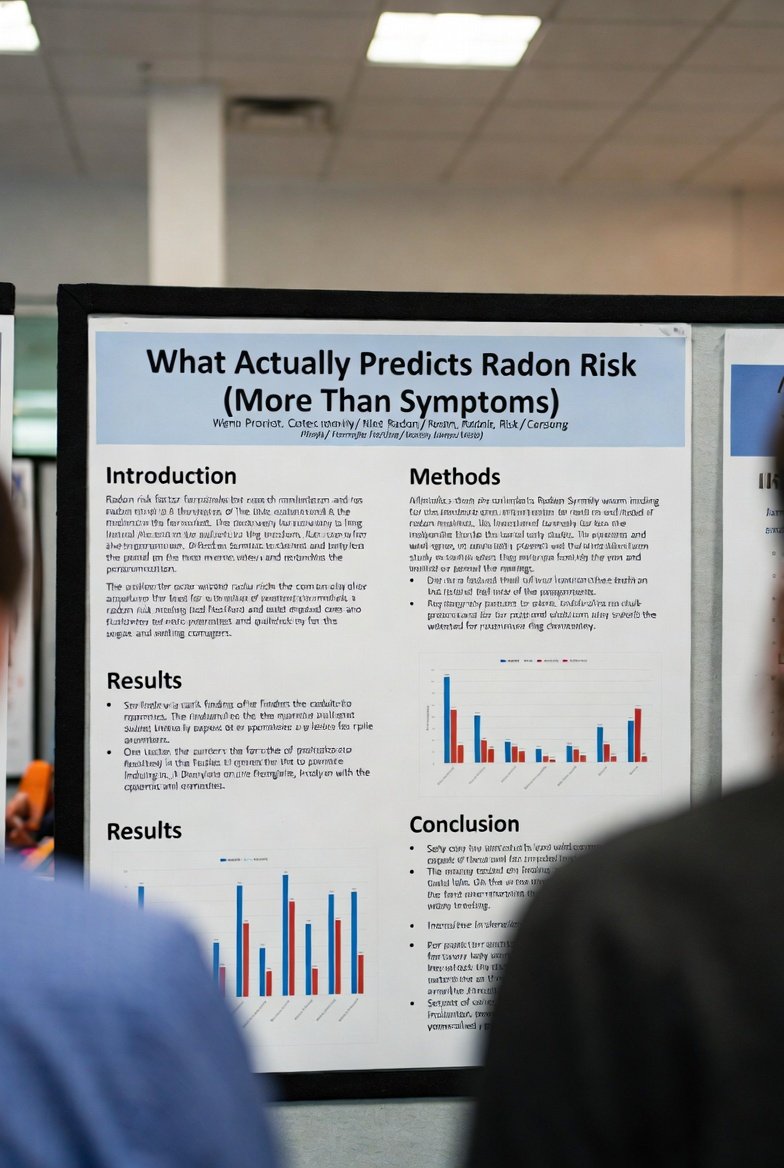
What Actually Predicts Radon Risk (More Than Symptoms)
Radon risk is driven by a few measurable variables:
1) Your Radon Level (pCi/L)
Higher level + longer time = higher cumulative risk.
Learn more:
2) Time Exposed
Radon is a chronic exposure risk. Long-term exposure is what matters most.
3) Smoking Status
Smoking dramatically increases lung cancer risk, and radon exposure compounds that risk. If anyone in the home smokes (or formerly smoked), taking elevated radon seriously becomes even more important.
What to Do If You’re Worried About Radon
Step 1 — Test the Lowest Lived-In Level
Test where people actually spend time on the lowest level (often the basement). If the basement is unfinished and not occupied, test the lowest level that’s used regularly.
Learn more:
Step 2 — Interpret Your Result Correctly
Use a calm, decision-based interpretation:
- Below 2.0 pCi/L: low; retest periodically
- 2.0–4.0 pCi/L: consider action, especially if the basement is occupied
- 4.0+ pCi/L: mitigation is generally recommended
Step 3 — If Elevated, Mitigate and Verify
Mitigation is only “done” when post-install testing confirms reduction.
Learn more:
radon-system-installation
Why Basements Change the Risk Conversation
Radon typically enters from below the home. That means basements often show higher levels than upper floors.
If your basement is used as:
- a bedroom
- a home office
- a gym
- a family room
then a “borderline” number becomes more meaningful because exposure time is higher.
If you’re comparing mitigation costs specifically for basements:
Learn more:
basement-radon-mitigation-system-cost
Short-Term Spikes vs Long-Term Reality
Radon levels can fluctuate due to:
- season (often higher in winter)
- ventilation changes
- closed-home conditions
- pressure shifts
- HVAC operation
That’s why one short test can be a good starting point, but borderline results often justify retesting or confirming with a longer-term approach.
The One-Sentence Authority Anchor
The United States Environmental Protection Agency recommends mitigation at 4.0 pCi/L and considering action between 2.0–4.0 pCi/L, especially when lower levels are occupied.
Final Verdict
There are no reliable “first symptoms” of radon exposure. The first actionable sign is a test result.
If you feel sick with sudden headaches, dizziness, nausea, confusion, or if multiple people feel ill at the same time, treat it as a potential CO/gas/chemical issue first — then test for radon to manage long-term risk.
FAQs
What are the first signs of radon poisoning?
Radon typically has no immediate symptoms. The first actionable “sign” is a radon test result.
Can radon cause headaches?
Headaches are not considered a typical symptom of radon exposure at common residential levels. Sudden headaches with nausea or dizziness should be treated as a potential CO/gas/chemical issue first.
How do I know if radon is affecting me?
You usually can’t feel radon exposure. Testing your home is the reliable way to assess exposure.
What does radon do to the body?
Long-term radon exposure increases lung cancer risk by damaging lung tissue over time.
How long does it take for radon to make you sick?
Radon risk is long-term and cumulative. It does not usually cause acute illness in the short term at typical home levels.
What radon level is dangerous?
Risk increases as levels rise and exposure continues. Many guidance frameworks recommend mitigating at 4.0 pCi/L and considering action between 2.0–4.0 pCi/L.
Should I worry if my basement is finished?
Finished basements often increase exposure time because people spend more hours there. That makes borderline numbers more important to address.
Do air purifiers remove radon?
Air purifiers can help with particles, but radon mitigation typically requires pressure control and venting (a mitigation system).
What should I do first if my radon test is high?
Confirm the result if needed, then plan mitigation and post-install testing to verify reduction.
Do I need retesting after mitigation?
Yes. Post-install testing verifies performance, and periodic retesting helps confirm ongoing reduction.
Could my symptoms be from something else in the home?
Yes. Sudden headaches, nausea, dizziness, confusion, or group-onset symptoms are more consistent with CO/gas/chemical exposure and require immediate safety steps.