
Radon Mitigation Cost: What It Really Costs and Why Prices Vary So Much
Introduction: Why People Ask About Radon Mitigation Cost
- Radon mitigation is rarely planned
- Most homeowners arrive here after:
- A test result raises concern
- A real estate transaction flags radon
- The moment creates uncertainty:
- Is this serious?
- Is it expensive?
- Do I need to act now?
- This page focuses on:
- Cost clarity
- Decision boundaries
- Realistic expectations
- Goal:
- Help you understand what radon mitigation typically costs
- Why prices vary
- When installing a system is actually justified
Average Radon Mitigation Cost in Real Homes
- For most single-family homes, costs fall into a predictable range
- Typical professional installation costs:
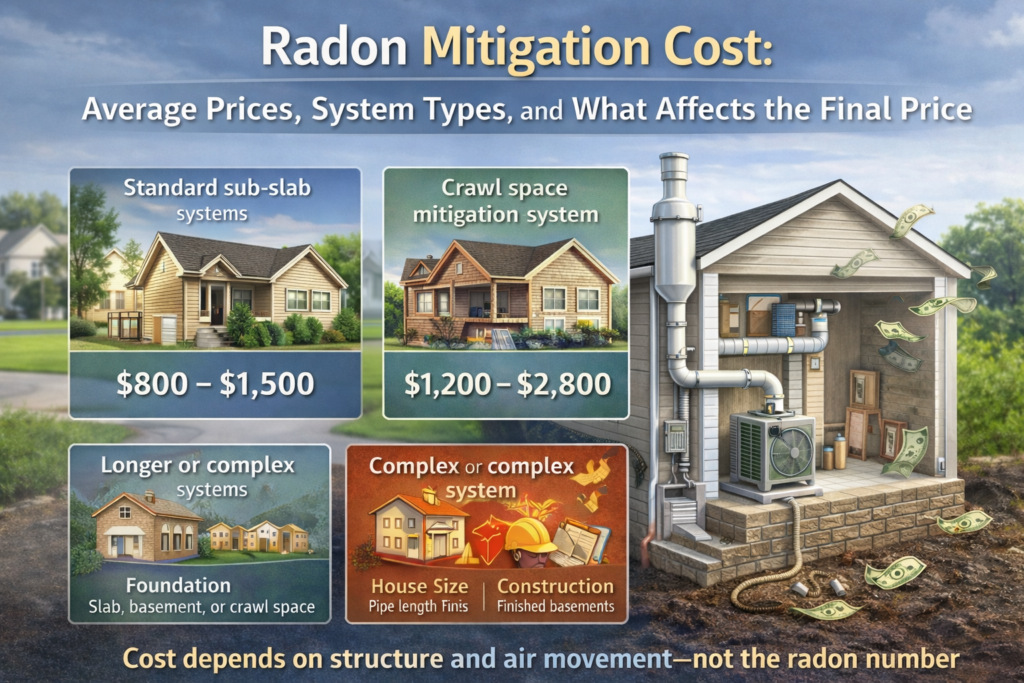
Average Cost Ranges
- Standard sub-slab system
- $800 – $1,500
- Larger homes or long pipe runs
- $1,500 – $2,500
- Crawl space mitigation systems
- $1,200 – $2,800
- Complex or multi-point systems
- $2,500 – $4,000+
- These ranges usually include:
- Materials
- Labor
- Post-installation verification testing
- Prices far outside these ranges usually indicate:
- Structural complexity
- Not inflated pricing
What the Cost of a Radon Mitigation System Actually Covers
- A radon mitigation system is not a single product
- The radon mitigation system cost reflects:
- Design
- Installation skill
- Verification
- A typical system includes:
- Custom system design based on sub-slab airflow
- PVC piping routed to the roofline
- Inline radon fan sized for pressure needs
- Sealing of visible entry points:
- Cracks
- Sump lids
- Penetrations
- Electrical connection for continuous fan operation
- Post-installation radon testing method
- Key clarification:
- If verification testing is not included, effectiveness is uncertain
Why Radon Mitigation Costs Vary Between Homes
- Two homes with similar radon levels can have very different costs
- Pricing depends more on:
- Air movement
- Structure
- Less on:
- The radon number itself
Foundation Type
- Slab-on-grade
- Usually least expensive
- Basements
- Vary based on slab thickness and accessibility
- Crawl spaces
- Often require membranes or encapsulation
- Frequently the largest cost driver
Home Size and Layout
- Larger homes may require:
- Longer pipe runs
- Higher-capacity fans
- Multiple suction points
- Each adds to radon system cost
- Even when radon levels are moderate
Construction and Access
- Finished basements
- Limited routing options
- Multiple slab sections
- These increase labor time
- They do not reduce effectiveness
- They increase complexity
Local Labor and Code Requirements
- Some regions require:
- Permits
- Inspections
- Licensed installers
- These add modest cost
- They improve accountability and consistency
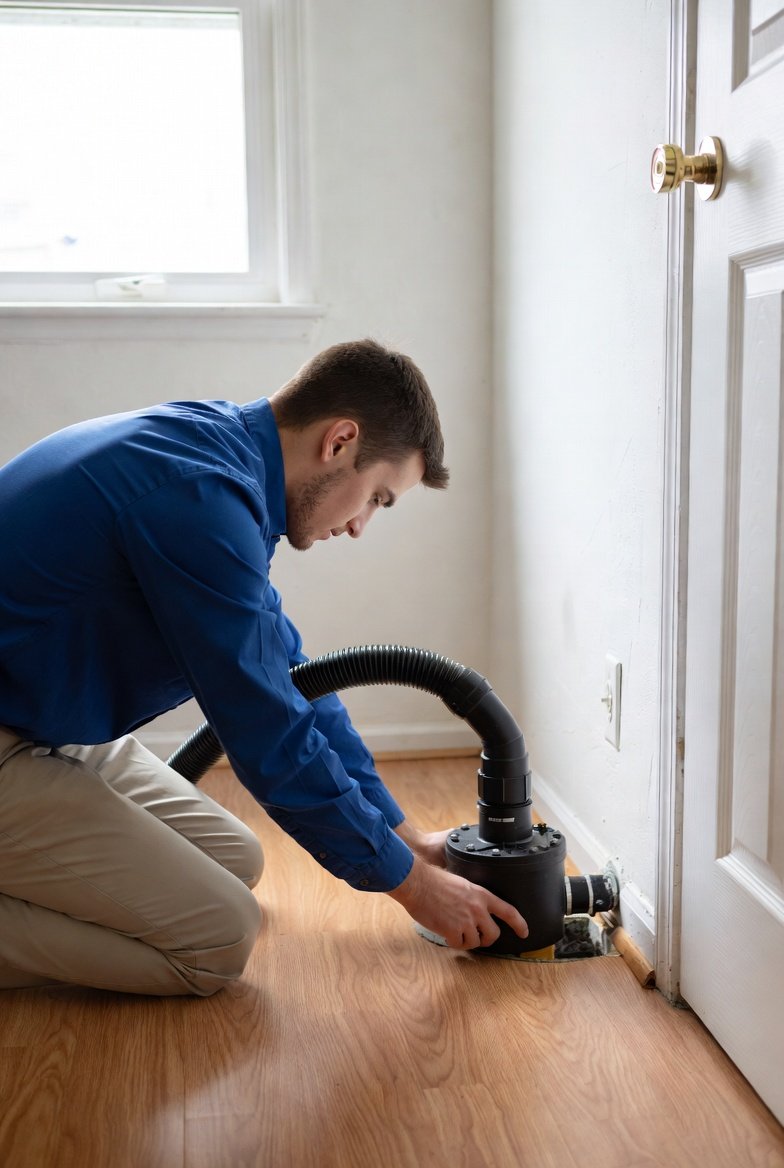
Installation vs Equipment: Where the Money Goes
- Radon mitigation is not mostly about the fan
- Typical cost breakdown:
- Materials (fan, piping, fittings): ~30–40%
- Labor and installation: ~40–50%
- Testing, verification, overhead: ~10–20%
- Why this matters:
- Very low quotes often underperform
- Poor design may look similar but fail to reduce radon effectively
When Radon Mitigation Is Clearly Worth the Cost
- Mitigation is generally justified when:
- Long-term test results exceed action levels
- The home is occupied year-round
- The property is being sold and mitigation is required
- Below-grade living spaces are used regularly
- In these cases:
- Radon services cost is about long-term exposure reduction
- Not just resale value
When It’s Reasonable to Pause Before Installing
- Immediate mitigation may not be necessary when:
- Only short-term testing has been done
- Seasonal variation hasn’t been evaluated
- The home is rarely occupied
- Results are near—but not clearly above—action thresholds
- In these cases:
- Additional testing or inspection can provide clarity
- Pausing here is:
- Not denial
- Responsible decision-making
Ongoing Costs After Installation
- Radon mitigation systems are low-maintenance
- Typical ongoing costs:
- Electricity for fan: ~$30–$70 per year
- Fan replacement every 7–12 years: $150–$300 installed
- Periodic radon retesting: DIY kits or professional testing
- Compared to installation cost:
- Ongoing expenses are modest
DIY Radon Mitigation and Cost Risk
- DIY mitigation is technically possible
- Common DIY problems include:
- Incorrect suction placement
- Undersized fans
- Inadequate sealing
- No verification testing
- When DIY systems fail:
- Professional correction is often needed
- Final Radon testing cost may exceed original average radon mitigation cost
Cost vs Effectiveness: What Actually Matters
- A properly designed system typically reduces radon by:
- 80–99%
- Effectiveness depends on:
- Accurate airflow assessment
- Proper fan sizing
- Correct installation and sealing
- Key takeaway:
- Price alone does not predict performance
- Design quality matters more than the lowest quote
A Practical Way to Think About Radon Mitigation Cost
- Instead of focusing only on price, ask:
- How high are confirmed radon levels?
- How long will the home be occupied?
- Is the concern:
- Health-based?
- Resale-based?
- Compliance-based?
- For many homeowners:
- Radon mitigation is a one-time structural improvement
- Similar to drainage or ventilation upgrades
Bottom Line on Radon Mitigation Cost
- Most radon mitigation systems cost:
- $800–$2,500
- Higher prices usually reflect:
- Structural complexity
- Not overcharging
- Installation quality matters more than equipment alone
- Mitigation is appropriate when:
- Risk is confirmed
- Not assumed
- If uncertainty remains:
- Better information is often the right next step
- Not immediate installation