
Indoor Air Quality Testing Cost: What You’re Paying For—and When It’s Worth It
Introduction: What People Really Mean by “Testing Cost”
- People searching IAQ testing cost aren’t usually bargain hunting
- The real concern is:
- Will this expense actually help me decide something—or just give me numbers?
- Indoor air quality testing can be valuable
- It is not universally necessary
- Cost varies because:
- Purpose varies
- Scope varies
- Documentation needs vary
- This page explains:
- Typical cost ranges
- What drives pricing up or down
- When testing is worth paying for
- When inspection—or no action—makes more sense
Cost, Documentation, and Risk Context
- IAQ testing is often discussed alongside professional guidance frameworks
- In practice:
- Testing is rarely about hitting a numeric limit
- It’s about:
- Risk management
- Documentation
- Reasonable evaluation
- Testing provides value by:
- Creating documented evidence of evaluation
- Reducing uncertainty around complaints
- Supporting defensible decisions
- Testing is a decision-support tool, not a pass/fail exam
Why Indoor Air Quality Testing Costs Are So Variable
- IAQ testing is not a standardized service
- There is:
- No single “correct” test
- No universal price
- Costs vary because:
- Different tests answer different questions
- Some situations require documentation
- Others only need reassurance
- Inspection may already explain the issue
- Understanding purpose first prevents paying for low-value testing
Typical Indoor Air Quality Testing Cost Ranges
Cost Tiers at a Glance
- Basic screening
- Typical cost: $150–$350
- Best for: single concern, reassurance
- Targeted testing
- Typical cost: $300–$700
- Best for: multiple indicators, decision-making
- Documentation-level testing
- Typical cost: $700–$1,200+
- Best for: records, disputes, transactions
- Urban markets and regions with higher lab or licensing costs may fall at the higher end
Basic Screening or Single-Concern Testing
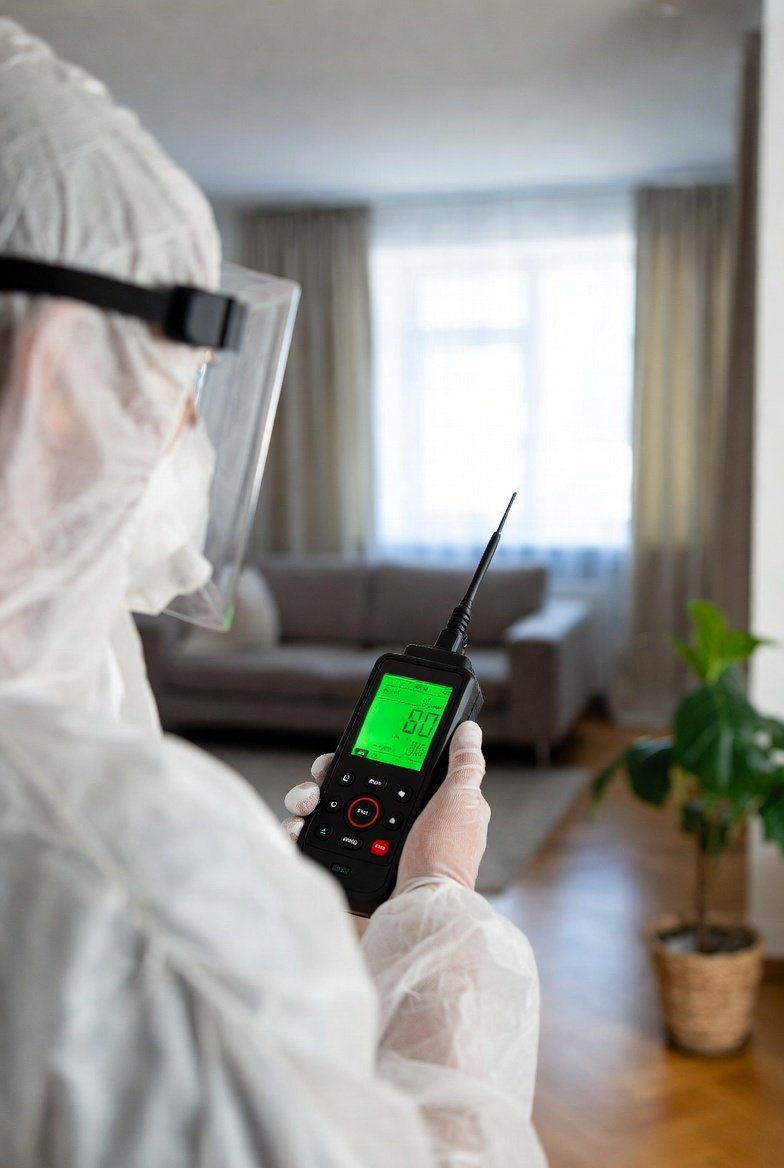
- Typical cost: $150–$350
- Most appropriate when:
- One narrow concern exists
- The goal is reassurance
- No lab analysis is required
- Common characteristics:
- Snapshot-style results
- Limited scope
- Often confirms conditions are typical
- May not explain underlying causes
Targeted Multi-Parameter Testing
- Typical cost: $300–$700
- Common when:
- Multiple indicators are evaluated together
- Lab analysis is required
- Mold spores
- VOC panels
- Interpretation is included
- Often the most useful tier after inspection
- Helps support real decision-making without over-testing
Documentation-Level or Comprehensive Testing
- Typical cost: $700–$1,200+
- Used when:
- Multiple rooms or zones are sampled
- Written documentation is required
- Results must be defensible
- Cost reflects:
- Analysis
- Reporting
- Interpretation
- Not just data collection
What Actually Drives the Cost of IAQ Testing
- Pricing is not based on square footage alone
- Key cost drivers include:
Number of Samples
- Each sample adds:
- Labor
- Materials
- Often lab fees
Type of Analysis
- Real-time monitoring costs less
- Laboratory analysis costs more
Scope of the Question
- Narrow questions cost less
- Broad documentation costs more
Reporting and Interpretation
- Clear explanation adds value—and cost
- Raw numbers alone are cheaper but less useful
Follow-Up Testing
- Baseline + confirmation increases cost
- Can improve confidence when justified
Inspection vs Testing: The Most Common Cost Mistake
- Many people pay for testing when indoor air quality inspection would have been cheaper and sufficient
Inspection Often Makes Sense When:
- Moisture or water damage is visible
- HVAC systems are clearly underperforming
- Odors are localized by room or time
Testing Is Worth the Cost When:
- Symptoms exist without visible causes
- Multiple occupants report similar issues
- Written documentation is required
Real-World Cost Examples
- Example 1
- Musty odor → inspection first
- Found: leaky return duct pulling crawl space air
- Fix resolved issue
- Testing avoided entirely
- Example 2
- Post-renovation odors and irritation
- Inspection found no moisture or HVAC issues
- Targeted VOC testing confirmed off-gassing was declining
- No remediation required
- Inspection prevents unnecessary testing
- Testing prevents unnecessary remediation
What IAQ Testing Can—and Cannot—Justify Spending On
- Testing is not a solution—it’s a support tool
Testing Justifies Its Cost When:
- Results change the next action
- Documentation reduces uncertainty or liability
- “No problem found” provides confidence
Testing Rarely Justifies Its Cost When:
- The cause is already known
- Results won’t alter decisions
- Testing substitutes for maintenance
- Data that doesn’t change the outcome isn’t cost-effective
When IAQ Testing Is Often Not Worth the Cost
- Testing may not be worthwhile when:
- Comfort issues are clearly HVAC-related
- Construction or renovation is ongoing
- The space is rarely occupied
- The issue has already been resolved
- Addressing obvious issues first usually saves money
A Simple Cost Decision Rule
Before paying for IAQ testing, ask:
- What question am I trying to answer?
- Would inspection answer it more cheaply?
- Will results change what I do next?
- Do I need documentation or just reassurance?
If testing won’t change the decision, it usually isn’t worth the cost.
Bottom Line on Indoor Air Quality Testing Cost
- Most IAQ testing costs a few hundred dollars
- The real value is clarity, not numbers
- The most cost-effective testing:
- Answers the right question once
- Or confirms no further action is needed
- Good testing saves money by preventing unnecessary next steps