
Radon Testing: When It Actually Helps, What the Results Mean, and When You Can Stop
Introduction: Why Radon Testing Usually Starts With Uncertainty
- Most homeowners don’t plan to test for radon
- Testing is often triggered by:
- A home inspection note
- A neighbor’s comment
- A test kit seen in a store
- This creates questions:
- Is radon a real concern here?
- Do I need to act?
- Or is this just expected worry?
- Radon testing exists to:
- Resolve uncertainty
- Not amplify fear
- Used correctly:
- Testing provides decision clarity
- Misused:
- It creates pressure without direction
- Context that matters:
- About 1 in 15 U.S. homes test above EPA action levels
- Testing alone resolves most situations without mitigation
What Radon Testing Measures (and What It Doesn’t)
- Radon testing measures:
- The concentration of radon gas in indoor air
- Over a defined time period
- Radon services
- Radon testing does not:
- Identify the source of radon
- Predict future levels with certainty
- Determine what solution is required
- A radon test provides:
- Information
- Not a diagnosis
- Radon levels naturally fluctuate due to:
- Weather
- Ventilation
- Seasonal pressure changes
- Occupancy patterns
- Understanding variability is key to using results responsibly
Radon Test Types Compared (What Each One Is Actually For)
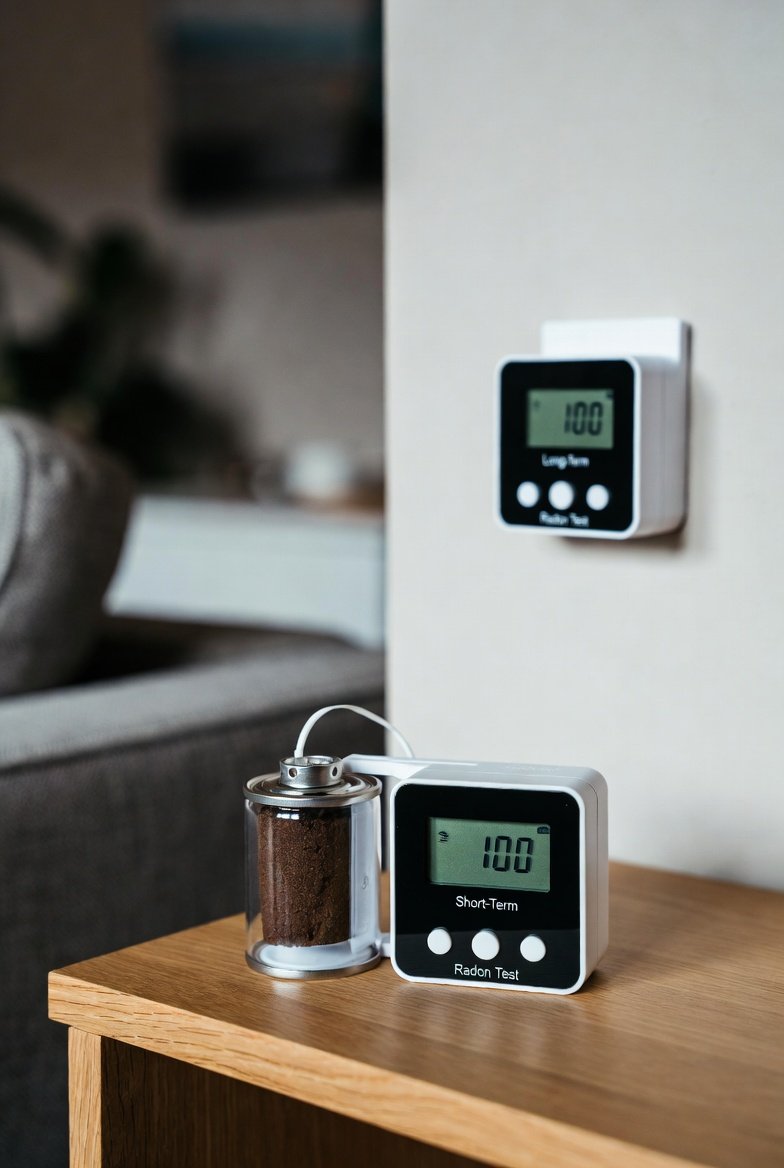
Short-Term Radon Tests
- Duration:
- 2–7 days
- Best for:
- Initial screening
- Typical cost:
- $15–$50
- Accuracy:
- Good
- Purpose:
- Identify whether confirmation is needed
- Not intended to:
- Be a final decision on mitigation
Long-Term Radon Tests
- Duration:
- 90 days or longer
- Best for:
- Confirming average exposure
- Typical cost:
- $30–$100
- Accuracy:
- Excellent
- Purpose:
- Smooth out daily and seasonal fluctuations
- Most appropriate when:
- A final decision is needed
Professional Radon Testing
- Duration:
- Usually 2–7 days
- Best for:
- Real estate transactions
- Documentation needs
- Typical cost:
- $150–$300
- Accuracy:
- Highest due to controlled placement and process
- Adds:
- Documentation
- Process control
- Not necessarily:
- Different physics or results
When Radon Testing Is Most Appropriate
- Radon testing works best when it answers a specific decision question
- Common appropriate scenarios:
- Buying or selling a home
- Using basement or below-grade living spaces
- Moving into a home never tested before
- Retesting after mitigation
- Retesting after major renovations
- Confirming earlier results
- Testing without a reason often:
- Creates noise
- Not insight
Short-Term vs Long-Term Radon Testing: How to Choose
Use Short-Term Testing When:
- You need quick feedback
- You are screening for presence
- You are asking:
- “Is radon mitigation present at a level that needs confirmation?”
Use Long-Term Testing When:
- Short-term results are borderline
- The home is occupied year-round
- You need to understand average exposure
- A final decision is approaching
Radon Testing Decision Matrix (What to Do Next)
Common Decision Paths
- Home purchase
- Test: Short-term
- Next step: Confirm if result >4 pCi/L
- Basement living
- Test: Long-term
- Next step: Retest periodically
- Post-mitigation
- Test: Short-term
- Next step: Verify reduction
- Borderline result
- Test: Long-term
- Next step: Average annual exposure
- This approach:
- Prevents unnecessary escalation
- Supports health-based decisions
DIY Radon Testing vs Professional Testing
DIY Radon Testing
- Appropriate for:
- Initial screening
- Works well when:
- Instructions are followed carefully
- Limitations:
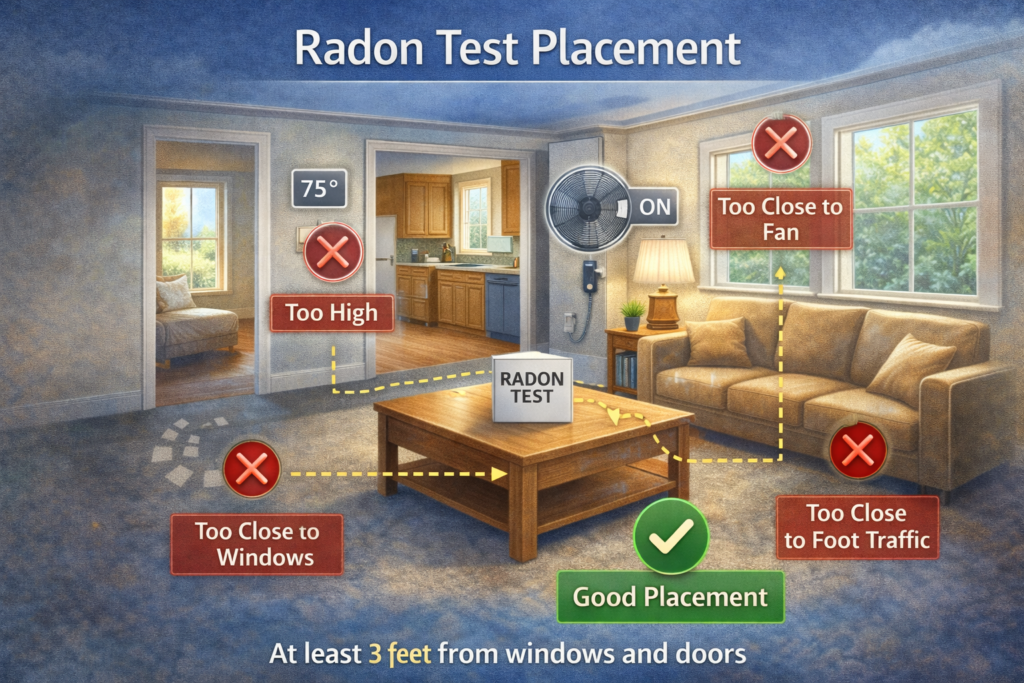
- Placement errors
- No documentation for transactions
Professional Radon Testing
- Adds value when:
- Documentation is required
- Placement must be controlled
- Results need interpretation
- Does not:
- Change radon physics
- Improves:
- Decision reliability
How to Interpret Radon Test Results (Without Overreacting)
- Radon results are often treated as:
- Safe vs unsafe
- Reality is more nuanced
EPA Action Level Context
- Below 2 pCi/L
- No action needed
- 2–4 pCi/L
- Consider mitigation
- Above 4 pCi/L
- Mitigation recommended
- These are:
- Decision thresholds
- Not emergency triggers
What If a Test Shows 3.5 pCi/L? (Common Edge Case)
- This result is:
- Borderline
- Not definitive
- Recommended next step:
- Long-term testing
- Purpose:
- Determine average exposure
- Many homes in this range:
- Test lower when averaged over time
When Radon Testing Alone Is Enough
- Testing alone is often the correct endpoint when:
- Results are consistently low
- Long-term averages confirm low exposure
- Space is rarely occupied
- No structural changes are planned
- Stopping here is:
- Appropriate
- Not negligent
Testing vs Inspection: A Critical Boundary
- Radon testing:
- Measures presence
- Inspection:
- Evaluates structure and entry pathways
- Inspection becomes relevant:
- Only after elevated levels are confirmed
- And mitigation is being considered
Common Radon Testing Mistakes
- Treating one short-term test as final
- Testing during unusual weather without context
- Moving test devices mid-test
- Over-testing without a clear question
- Avoiding these mistakes keeps testing useful
How Often Radon Testing Is Actually Needed
- Reasonable retesting includes:
- After mitigation
- After major renovations
- Every few years for confirmation
- During real estate transactions
- Frequent routine testing:
- Rarely adds value
Radon Testing as a Decision Tool—not a Funnel
- Used correctly, radon testing:
- Reduces uncertainty
- Prevents unnecessary mitigation
- Supports confident stopping decisions
- Enables informed action when justified
- Restraint in testing:
- Builds trust
- Matches high-quality SERP expectations
Bottom Line on Radon Testing
- Testing measures presence—not cause
- Short-term tests screen
- Long-term tests confirm
- Borderline results require averaging—not panic
- Testing alone is often enough
- Stopping is a valid outcome