
Radon Mitigation Systems: How They Work, Why Most Homes Use the Same One, and When Variations Matter
Introduction: Why “System Types” Are Often Misunderstood
- Radon mitigation systems are often presented as many competing options
- In reality:
- Most homes use the same core system
- Variations are driven by construction, not preference
- Misunderstanding system types can lead to:
- Unnecessary upgrades
- Inflated expectations
- Hesitation when none is needed
- This page explains:
- How radon mitigation systems actually work
- Which types are commonly used
- How professionals choose the right configuration
- Goal:
- Clarity, not persuasion
What a Radon Mitigation System Does at a Fundamental Level
- All radon mitigation systems serve one purpose:
- Prevent radon from entering living space
- Radon services
- They do this by:
- Controlling air pressure
- Controlling airflow
- What systems do not do:
- Neutralize radon
- Trap radon
- Eliminate radon at its source
- Instead:
- They make it easier for radon testing method to exit the home than enter it
Three Fundamentals of Every Effective System
- A pathway for radon to exit
- A pressure difference favoring outward movement
- Continuous operation to maintain pressure
- When these are present:
- Indoor radon levels drop, often dramatically
The Dominant Residential System: Sub-Slab Depressurization (SSD)
- For homes with:
- Concrete slabs
- Basements
- Sub-slab depressurization is:
- The most common
- The most consistently effective
- When homeowners say “radon system,” they usually mean SSD
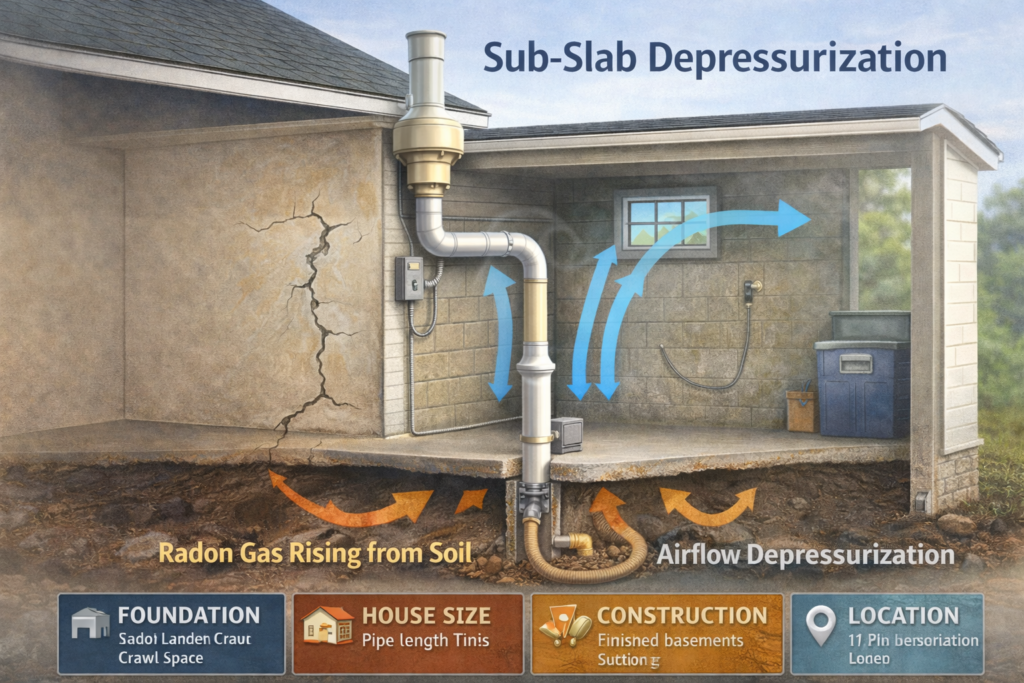
How Sub-Slab Depressurization Systems Work
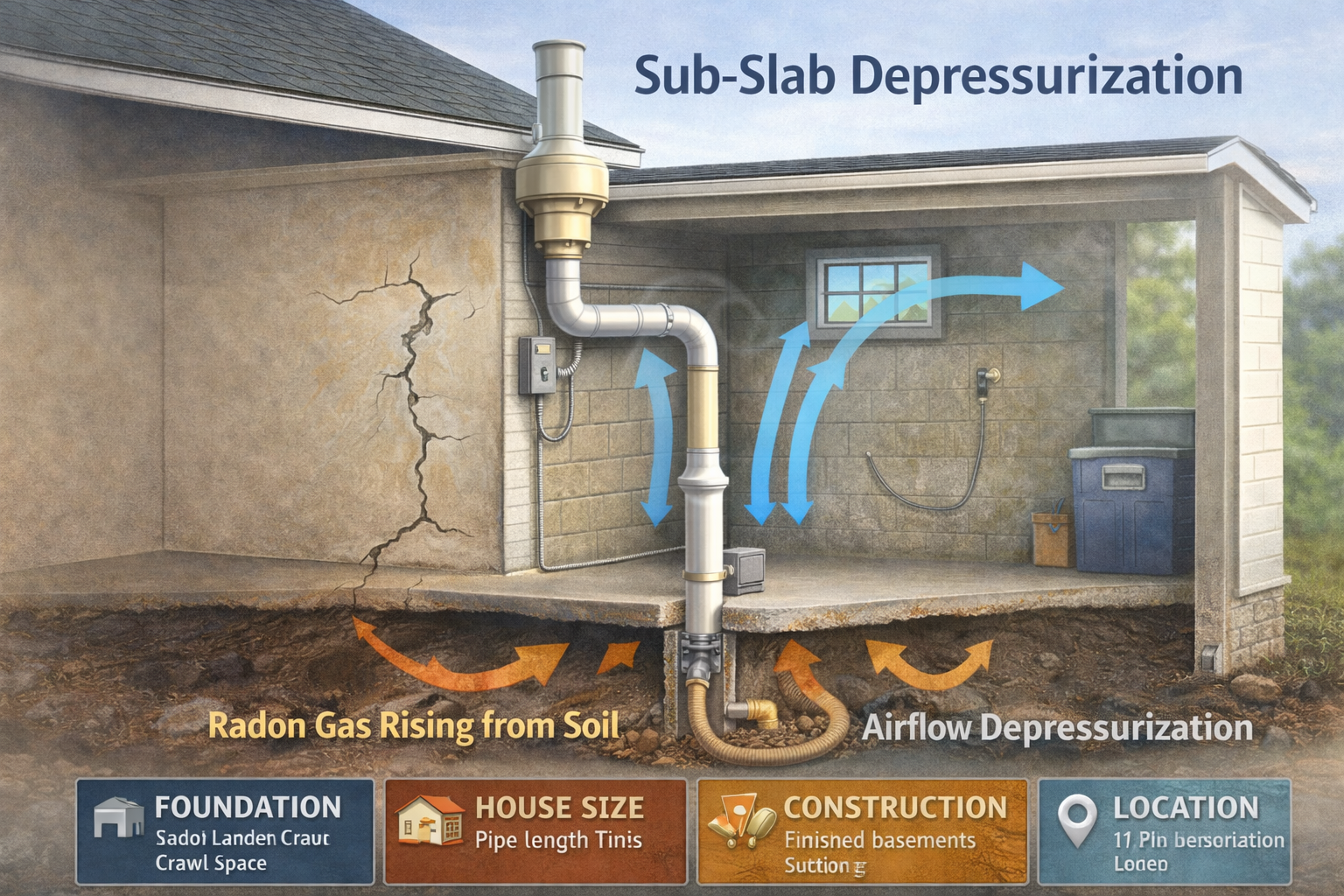
- A small hole is drilled through the slab
- A suction pit is created beneath the concrete
- PVC piping connects the pit to a radon fan
- The fan:
- Pulls radon-laden air from beneath the slab
- Vents it safely above the roofline
- System runs continuously
- Result:
- Lower pressure beneath slab than inside home
- Radon follows the easier path—out, not in
Why Sub-Slab Systems Are Used in Most Homes
- Effective across a wide range of radon levels
- Adaptable to many slab and basement designs
- Predictable, testable results
- Simpler than most alternatives
- Proven performance over decades of use
Single-Point vs Multi-Point Systems
- These are not different system types
- They are variations of the same SSD approach
Single-Point Suction
- Used when:
- Air communicates well beneath the slab
- One suction point influences the entire foundation
Multi-Point Suction
- Used when:
- One point cannot influence all slab areas
- Additional points improve coverage—not performance by default
- Key clarification:
- More suction points ≠ better system
- Only necessary when structure requires it
Radon Mitigation Systems for Crawl Space Homes
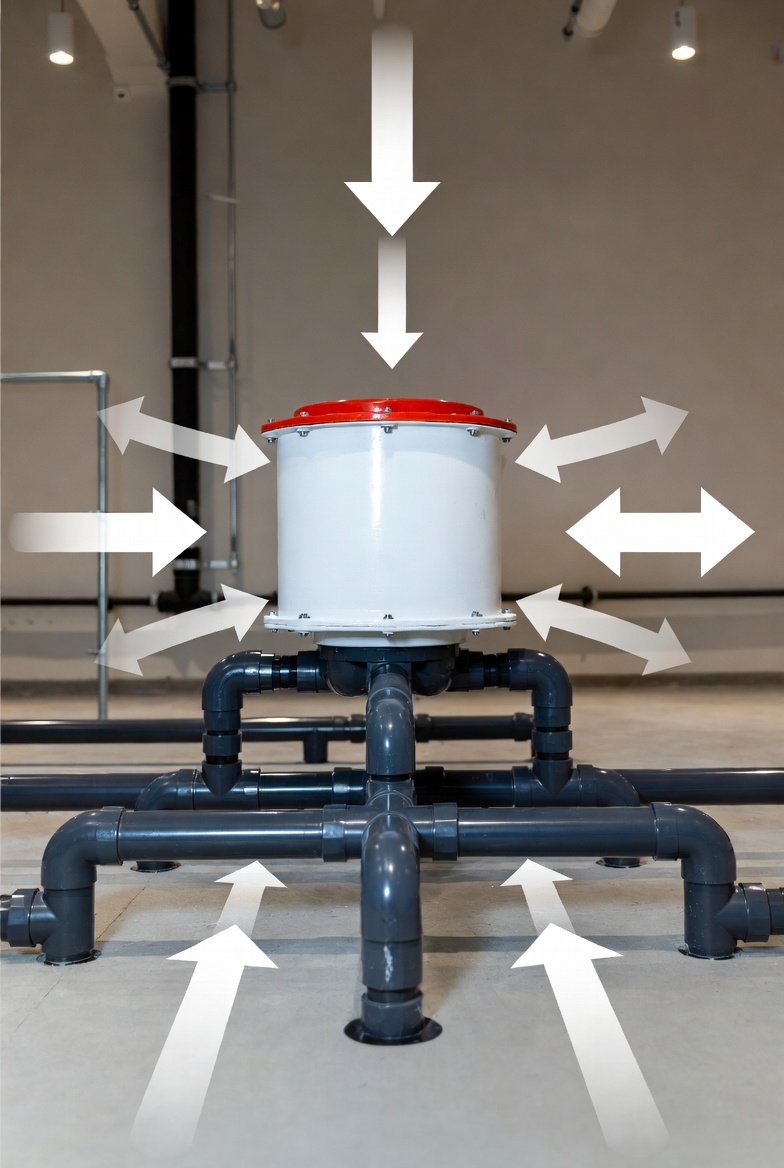
- Crawl spaces allow radon to enter more freely
- They require a modified approach
Crawl Space Depressurization with Membrane
- Most common crawl space solution includes:
- Heavy plastic membrane over exposed soil
- Sealing membrane to:
- Walls
- Piers
- Penetrations
- Drawing air from beneath membrane using a fan
- Venting radon safely outside
- Effect:
- Crawl space becomes a controlled environment
- Radon migration upward is prevented
Why Crawl Space Systems Are More Variable
- Crawl spaces differ widely in:
- Size
- Accessibility
- Moisture conditions
- Soil composition
- Structural obstacles
- Result:
- More customization required
- Greater cost variability than slab systems
Block Wall and Drain Tile Mitigation (Situational Techniques)
- Some homes allow radon to travel through:
- Hollow block walls
- Perimeter drain tile systems
- In these cases, mitigation may include:
- Block wall suction
- Draws air from hollow masonry blocks
- Drain tile depressurization
- Applies suction to footing drains
- Block wall suction
- Important clarification:
- These are supplemental techniques
- Not primary system types
- Used when:
- Sub-slab suction alone isn’t sufficient
Active vs Passive Radon Mitigation Systems
Passive Systems
- Rely on natural airflow
- Sometimes installed in new construction
- Limitations:
- Unpredictable performance
- Limited verification
- Often insufficient in existing homes
Active Systems
- Use a fan to create consistent suction
- Advantages:
- Reliable pressure control
- Verifiable results
- Effective in most homes
- For existing homes:
- Active systems are the standard
What Radon Mitigation Systems Do Not Do
- Clarifying limits prevents unrealistic expectations
- Radon systems do not:
- Stop radon from being produced in soil
- Eliminate radon permanently
- Work if the fan is off
- Replace periodic retesting
- They manage airflow
- When designed correctly:
- That’s usually sufficient
How Professionals Decide Which Radon System Is Needed
- System choice is not about:
- Brand
- Complexity
- Preference
- It is about diagnosis
Key Factors Considered
- Foundation type and layout
- Sub-slab airflow communication
- Presence of crawl spaces or drain tiles
- Radon entry pathways
- Structural constraints
- Correct system = system that:
- Reliably creates negative pressure beneath the home
How Effective Radon Mitigation Systems Usually Are
- Properly designed systems typically reduce radon by:
- 80–99%
- Effectiveness depends on:
- Correct suction placement
- Proper fan sizing
- Adequate sealing
- Continuous operation
- System “type” matters less than:
- How well it matches the structure
Common Misconceptions About Radon Systems
- “More parts mean better protection.”
- Only when needed
- “A louder fan works better.”
- Fan size must match airflow needs
- “Once installed, it never needs checking.”
- Periodic retesting confirms performance
When Homes Need Layered Mitigation Approaches
- Some homes require multiple techniques due to:
- Large footprints
- Multiple slab sections
- Mixed foundation types
- Poor sub-slab airflow
- This does not mean failure
- It reflects:
- Structural reality
A Clear Way to Think About Radon Mitigation Systems
- Think in terms of airflow strategy, not products
- Ask:
- Where is radon entering?
- Where can pressure be controlled most effectively?
- How can radon be redirected outside consistently?
- Once answered:
- System design becomes logical
- Not confusing
Bottom Line
- Most homes use sub-slab depressurization
- Crawl spaces require membrane-based systems
- Variations reflect structure—not quality
- Effectiveness depends on:
- Design
- Installation
- Not on complexity
- Understanding how systems work allows homeowners to:
- Evaluate recommendations calmly
- Avoid overbuilding
- Avoid overspending